Skip to content

Throne of Magical Arcana · Chapter 65

Chapter 61: Interrogation

January 17, 2020 · 6 min read · 1,130 words

— Such a terrifying earthquake, it feels like Wenchuan. Well, since it's relatively quiet, I'll go ahead and release a chapter. The evening update will depend on the aftershocks.

I hope everyone in Ya'an stays safe.

………………………………………………………………………………………………

Othello's stern, slightly aged voice came from inside the office: "Who is it?"

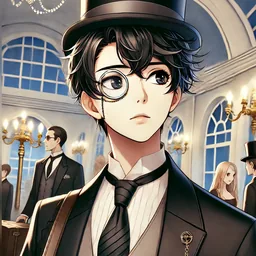
"It's me, Victor. Director Othello, I have something I'd like to discuss with you." Victor dropped the smile he had been wearing moments ago, once again becoming composed and mild-mannered.

Othello's voice fell silent for a few seconds, then he said without suspicion: "Heh heh, Victor, are you worried about Her Highness's evaluation of your piece? Come in, the door isn't locked."

His mood seemed exceptionally good — he even gave a rare chuckle, most likely because he had received praise from Princess Natasha.

For someone like him who had not awakened the bloodline to become a knight, the best way to maintain his noble standing and the security of his fief and properties was to earn the appreciation of the Grand Duke, or of Princess Natasha who had already inherited the title of Countess Violet. And Princess Natasha was extremely passionate about music — as a director of the Music Association, Othello held a significant advantage in this regard.

Victor turned the copper doorknob, slowly pushed the door open, and led Lucian inside.

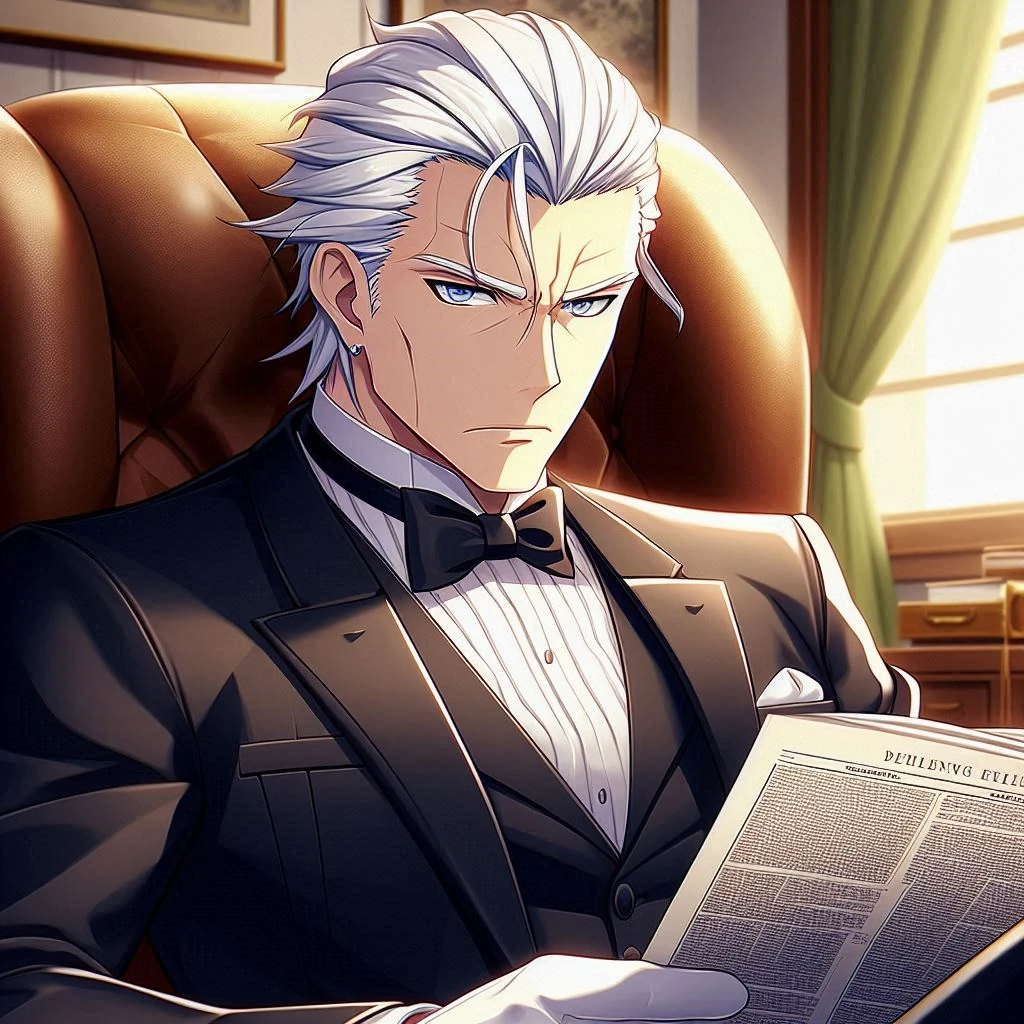
Othello sat behind a red wooden desk, his black formal attire crisp and immaculate, without a single trace of rainwater. His stern expression had softened, his complexion was ruddy and full of vigor. In his hand he held a Feather Pen, scratching away at something on a sheet of paper. When he heard Victor approaching, he looked up and said: "Victor, Her Highness has taken great interest in the piano concerto you composed over the past year. She's very curious about that brand-new instrument, the 'Piano', and she's looking forward to next Saturday evening's concert. Don't disappoint her."

"Hm?" Upon seeing Victor, Othello naturally noticed the young man following behind him who was quietly closing the door, but he maintained his noble etiquette and refrained from asking directly, instead waiting for Victor's introduction. Perhaps because Lucian's attire was tidy and refined, his appearance handsome and composed — easy to leave a favorable impression — Othello did not seem displeased, merely a bit curious. "Why has Victor brought a strange young man to see me?"

He had clearly forgotten that he had once seen Lucian, back when the latter was still wearing a linen short jacket.

Victor was in a pleasant mood. Although he knew the negotiation would certainly be difficult, he was filled with fighting spirit and had mentally prepared himself for setbacks. "I'm delighted by Her Highness's appreciation. I have every confidence in the concert. Director Othello, this is my student Lucian — Lucian Evans. He has composed an exceptional piece, and I was hoping you might evaluate it. Your authority on serious-themed music is universally recognized."

Even though a musician was by nature a sentimentalist, that did not mean Victor was inept at communicating with others or some kind of socially inept recluse. He did not directly state that he wanted to swap out the program; instead, he offered Director Othello a small compliment, hoping the man would examine Lucian's piece without prejudice or resistance.

Othello did not find this at all unusual. If Lucian was truly Victor's student in music, then introducing and recommending him to other musicians, performers, and critics was perfectly normal — and the reason given was almost always to have someone evaluate a student's composition or performance. So, his mood still buoyant, Othello's stern face broke into a polite smile: "Victor, when did you take on this student? You've spent the entire past year preparing for the concert — I'm surprised I never heard about this."

Without explanation, Victor simply smiled and handed the Music Score to Othello, intending to wait until he had finished reading before saying anything more.

Othello took the score, his expression returning to seriousness, and began reading it attentively. Melodies naturally surfaced in his mind. Before long, he was deeply struck by the opening — brief, powerful, and utterly unforgettable. He furrowed his brow slightly. Starting an entire movement with notes like these practically guaranteed intense turbulence to follow. In all his decades of musical career, he had never encountered anything like this. He could almost smell a scent he disliked — namely, the musical trend that Altor had been pioneering in recent years, using personal emotions and other subjects as themes.

Although skilled in serious-themed music, Othello's definition of "serious" was strictly limited to religious subjects. Moreover, being well advanced in age, he instinctively resisted new things.

Yet the subsequent thunderous and overwhelming melodies gave Othello the sensation that his heart might stop beating. He did not recover until he had finished reading the first movement, at which point he discovered that his palms were drenched in sweat, the edges of the score dampened and wrinkled — as though he had just survived a harrowing battle.

His revulsion toward this kind of thematic music made Othello, upon recalling the first movement, wish he could tear the entire score to shreds and prevent it from ever circulating, to stop others from being infected by such music.

No matter how much he despised it, no matter how much he detested it, Othello still gave the first movement's melody the highest possible evaluation. The two emotions warred within him, and the furrow between his brows never relaxed.

After finishing all the movements, Othello fell silent, because he did not know how to evaluate it. In recent years, Musical Review and the Symphony Herald had been welcoming toward this type of thematic music, and the mainstream of Altor's musical movement, led by Princess Natasha, was no different — so it was impossible to critique it from that angle.

As a prestigious noble-musician, he would not stoop so low as to nitpick the technical details of a young man who had only just begun composing.

As for praising the melody — Othello would certainly not go against his own conscience to do that.

The silence made time feel as though it were crawling. Finally, Othello set the score down and spoke in a grave, measured tone: "I am pleased to see a young person of great musical talent, but Lucian, music is the voice through which mortals praise the Lord — it is a sacred and magnificent hymn of faith. I hope you will devote more of your talent and your thoughts to that purpose."

"Thank you for your evaluation, Director Othello." Lucian responded politely, not taking any of it to heart whatsoever. Praising the Lord himself — now that would truly be the greatest joke of all.

End of chapter 65